


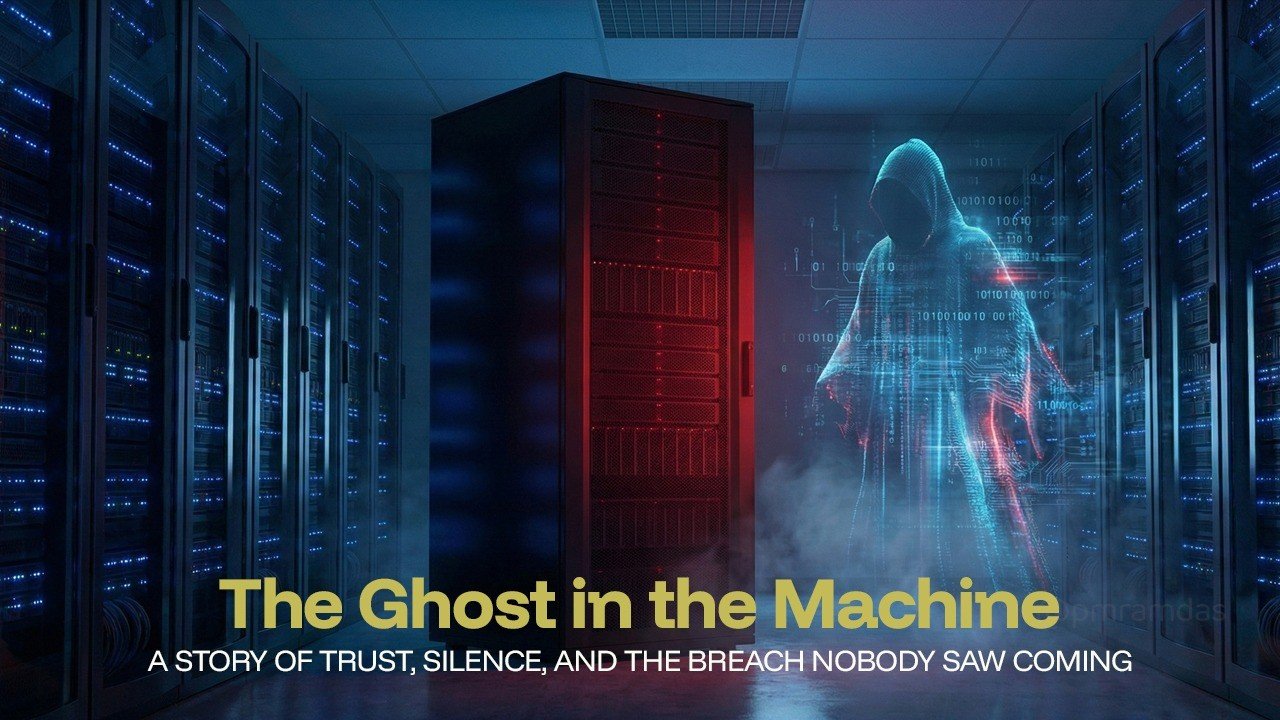

The phone rang at 2:47 AM. Not the work phone, the personal one. The one only family and the board chairman have.
Arjun Mehta, CISO of a Fortune 500 company, answered with the muscle memory of someone who’d done this a hundred times. It was the CFO. “Our analytics vendor just sent a breach notification. We’re on the list. Our customer data. Our transaction logs. Everything.”
Two days until the earnings call. And somewhere out there, their data was already floating on the dark web.
The Week That Changed Everything
Last week gave us three stories. Three whispers that became screams.
The Invisible Empire: A global takedown exposed ransomware infrastructure that had operated for years-not months. Every ransom paid by desperate hospitals, manufacturers, and cities had flowed through this invisible machine. The criminals weren’t hiding in basements. They were running corporations.
The SaaS Domino: A trusted analytics provider was breached. Within 72 hours, that single compromise cascaded into customer environments across healthcare, finance, and retail. One vendor. Hundreds of companies. Millions of records. The scariest part? Most victims had no idea their data even lived in that environment.
The Government Shutdown: A public-sector vendor became a single point of failure for millions of citizens. The attack vector wasn’t sophisticated. It was compromised credentials – a reused password, a bypassed MFA, a forgotten service account. The attacker walked through the front door wearing an employee badge.
The Patterns We Keep Ignoring
After 25 years in this field, including my time in the Indian Navy, I’ve stopped being surprised by attacks. I’m surprised by the patterns we refuse to see.
Third-party is now first-order risk. Your SaaS ecosystem is your attack surface. Every vendor you onboard is another door. The company that breached your data last week? You probably approved them in a 30-minute procurement call two years ago.
Ransomware went quiet. Forget encryption and countdown timers. The new playbook is simpler: access, move laterally, steal data, send a polite extortion email. No alarms. No disruption. Just leverage.
Identity is the only perimeter that matters. Firewalls mean nothing when attackers walk in with legitimate credentials. Compromised identities, weak MFA, forgotten service accounts, these are the doors that stay open because of assumption failures, not technology failures.
What the Survivors Did Differently
The organizations that slept a little better last week weren’t smarter or luckier. They were prepared.
They treated vendors like insiders – monitoring third-party access the way they’d monitor a privileged user. Behavioral baselines. Anomaly detection. Immediate revocation capabilities.
They practiced bleeding before they bled – running joint incident response exercises with key vendors long before any crisis. When the breach hit, they weren’t scrambling to find phone numbers. They were executing.
They watched the data, not just the network – keeping telemetry close to where data actually lived. SaaS logs. Identity signals. Exfiltration patterns. When the quiet heist began, they noticed.
The Leadership Reckoning
CISOs: You’re not a technical guardian anymore. You’re a translator – converting blast radius into business language.
CIOs and CTOs: Every technology decision is now a security decision. That SaaS tool that “just works” also just extended your attack surface.
CFOs: Cyber insurance isn’t a checkbox. Underwriters are asking harder questions, and your coverage has more exclusions than protections.
CEOs: The next breach won’t be an IT incident. It’ll be a leadership referendum. Everyone will ask: What did you know, and when did you know it?
The 2 AM Question
Arjun Mehta stood at his window until dawn. The breach would take months to understand. The lawsuits would take years. The reputation damage? Forever.
But standing there, he realized the breach wasn’t the failure. The failure was every assumption that came before it – that trusted vendors stay trustworthy, that signed contracts mean security, that someone would notice if something went wrong.
The failure was trusting silence.
So let me ask you what Arjun asked himself that morning:
If your most critical SaaS provider suffered a silent data-theft attack tonight, would you spot it in hours? Days? Or only when the extortion email arrives?
Here’s my answer: Assume the breach already happened. Build your operating model around detection and containment, not just prevention.
Because in this game, the winners aren’t the ones who never get hit. They’re the ones who notice first.
What’s your 2 AM lesson? Drop it in the comments.
#Cybersecurity #Leadership #CISO #ThirdPartyRisk #SaaSSecurity #CyberResilience