
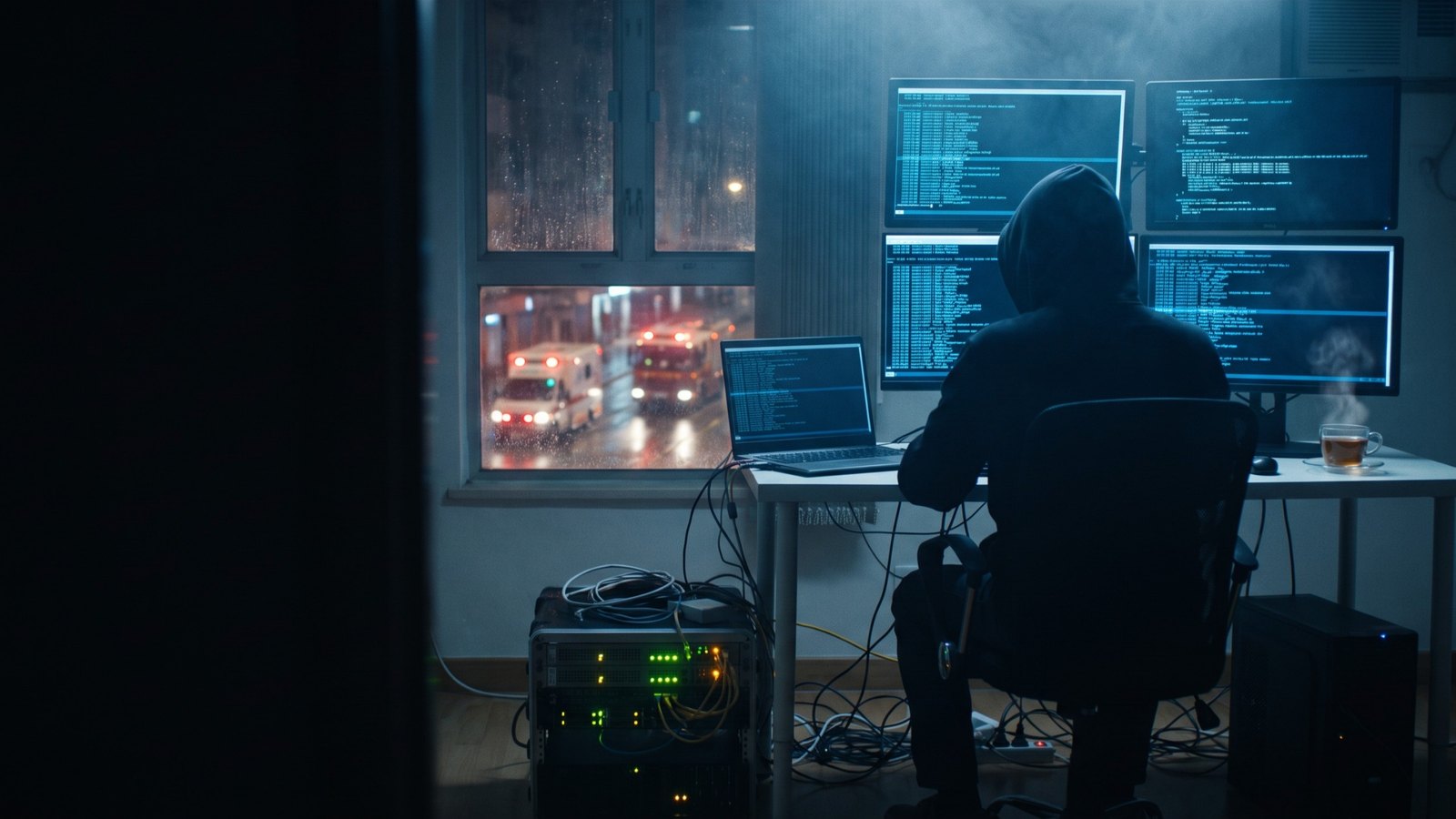





Billions Frozen. Trust on Hold.
Binance froze billions after a reported $6.3 billion theft traced to a compromised laptop. What the incident teaches boards about privileged devices, containment, recovery promises and customer trust.
The Binance incident and the questions every board should ask
An evolving case study based on reporting available on 30 October 2026. All images are AI-generated conceptual illustrations, not photographs of the incident. The leadership analysis below is my interpretation, not a finding about Binance’s internal controls.
You can freeze billions in crypto. Can you stop trust from leaving?
That was the question I kept coming back to while reading about the Binance security incident. The headline carried an enormous number. But as a cybersecurity leader, I found myself thinking about something much smaller: the distance between a person’s everyday computer and a business’s most consequential decisions.
How many barriers sit between the two? What happens when one fails? And who can stop the damage while everyone else is still trying to understand it?
The story changed while the response was unfolding
The initial Reuters report on 29 October described more than $2.38 billion frozen by Tether and Circle following a potential Binance security issue. Its updated coverage on 30 October reported a $6.3 billion theft, about $3 billion located and frozen through partners, and suspended withdrawals. Binance said it would cover losses. [1]
That progression matters. An early freeze figure is not a final loss figure, and a freeze does not establish that assets have been returned to customers.
For anyone communicating during a crisis, this is the first discipline: explain what each number measures before putting it into a headline.
The difference between money identified, money immobilised and money restored is a difference customers deserve to understand.
An ordinary device, an extraordinary question
Binance’s preliminary investigation pointed to a compromised engineer’s laptop as a possible entry point. The full attack path remained under investigation. [1]
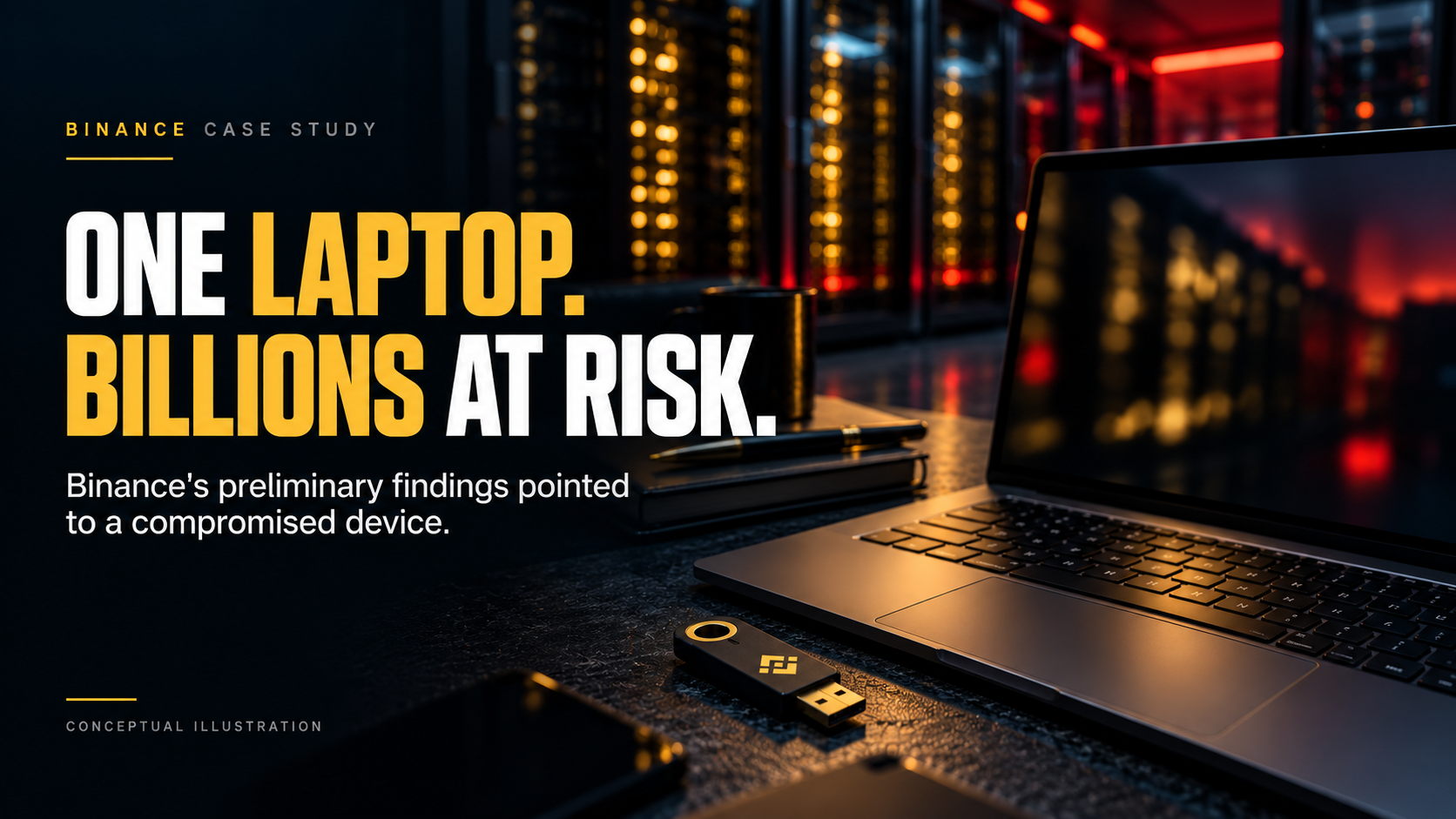
An endpoint becomes a business concern when the authority reachable through it exceeds the damage the organisation can tolerate.
I would resist turning that preliminary finding into a story about an employee making a mistake. We do not have the evidence to assign personal blame.
The more useful question is architectural: if an attacker controls an authorised person’s device or session, what can they do next?
For an organisation reviewing its own exposure, I would want to see that question tested against actual permissions. Which sessions can reach production? Which actions require independent approval? Where are transaction limits enforced? Can suspicious activity be stopped outside the potentially compromised environment?
Those are review questions, not claims that particular Binance safeguards were absent.
The practical exercise is simple to describe, though demanding to execute. Pick a privileged workstation. Assume it is compromised. Follow every route from that workstation to a business outcome that matters.
Then ask the owners of each barrier to demonstrate how it holds.
An inventory of security tools will not answer that question. Evidence from an exercised attack path might.
Then came the race to contain the consequences
Reuters reported asset freezes involving Tether, Circle and other industry partners. [1]
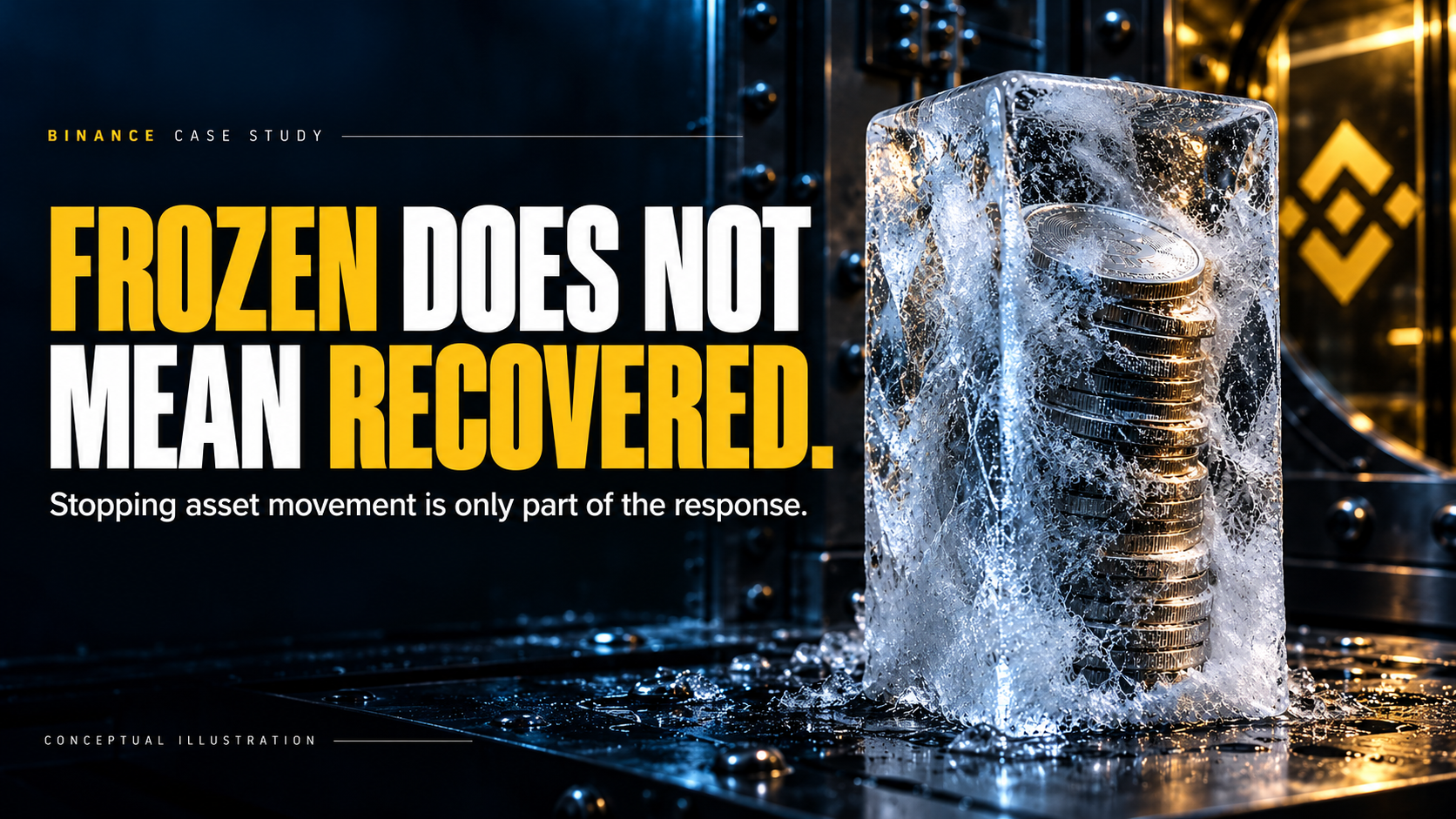
Containment can require action from organisations beyond the one experiencing the incident.
This is the part of the story I would take into an incident-response rehearsal.
Imagine the decision your team may need to make: interrupt a service now, with incomplete information, or leave it operating while the investigation continues. This is an illustrative leadership dilemma, not a reconstruction of Binance’s internal conversations.
Who has the authority to decide? What evidence do they need? Who takes over if that person cannot be reached?
Now extend the exercise beyond your own systems. Suppose containment depends on a bank, cloud provider, custodian or token issuer. A name in a contact list is only the beginning. Does the partner know who can make a valid request? Have you agreed what supporting evidence is necessary? Has anyone rehearsed an urgent escalation together?
I would test those relationships before depending on them.
There is also a limit to the metaphor of freezing money. Different assets and systems permit different interventions. A successful freeze in one part of an ecosystem should never become an assumption that every asset can be stopped in the same way.
A promise to cover losses starts another test
Binance’s commitment to cover losses is material. It is a commitment whose execution must be distinguished from the announcement itself. [1]
This is where I would bring the CFO and business leadership into the discussion.
How would our organisation fund a comparable commitment? What liquidity would be available immediately? Which obligations would continue during an interruption? How would we reconcile balances and demonstrate that customers had been made whole?
These are financial-resilience questions. A security team cannot settle them alone.
My concern in any crisis would be a gap between a reassuring sentence and an operationally supported promise. The people making public commitments should know what finance, operations, legal and security can substantiate together.
The customer is waiting for a different answer

For a customer, reassurance must eventually become verifiable access and a clear account of what happened.
Consider a hypothetical customer reading the news over breakfast. They are unlikely to start with wallet architecture or threat attribution. Their questions are personal: Can I access my assets? Am I affected? What should I do now?
That perspective should shape the response.
I would want every update to state what has been verified, what remains unknown, what services are restricted and when the next update will arrive. If an earlier assessment changes, explain the change plainly.
Silence creates room for speculation. Overconfidence creates statements the investigation may later contradict. Clear, dated updates give customers something more useful: a record against which they can judge progress.
Trust will depend on whether those updates remain consistent with what people subsequently experience.
What I would put on the next board agenda
I would ask for five demonstrations:
- The maximum damage reachable from one compromised privileged device. Show the tested limits and independent barriers.
- The authority to interrupt critical operations. Name the decision-maker, deputy and triggers.
- The external containment process. Exercise the partner escalation rather than merely reviewing its documentation.
- The ability to honour recovery commitments. Connect the response plan to available funding and reconciliation procedures.
- The standard for communicating uncertainty. Make each material statement traceable to verified evidence.
None of this requires pretending we already know the complete Binance root cause. The public record is still developing. The case offers a reason to examine our own assumptions now.
I would not conclude that a breach at a large exchange proves prevention is futile. I would conclude that leadership must understand what happens after prevention fails, including the decisions that technology cannot make for us.
Your customers should never discover the limits of your security at the same moment you do.
Source and reporting boundary
[1] Reuters, report first published 29 October 2026 and updated 30 October 2026. Original Reuters URL. Updated Reuters text consulted through MarketScreener, titled Hackers steal $6.3 billion from Binance in world’s biggest crypto heist, updated 30 October 2026 at 04:34 a.m. EDT (2:04 p.m. IST).
Figures reflect that reporting snapshot, not a final independently audited loss or recovery statement. No completed forensic report is asserted here. Hypothetical situations are identified as such; the author does not claim participation in the response.

Instincts built hunting signals at sea, sharpened for two decades against digital adversaries. Not machine-written. Machine-proofread, comma by comma. Everything else, the noticing, the arguing, the getting it wrong sometimes, is mine. The bytes are for everyone; the opinions are only ever mine.
“Until the lion learns how to write, every story will glorify the hunter.” This is the lion's version.